23 August 2006

SANAA in Toledo

[all images: six million dollar man's flickr site]

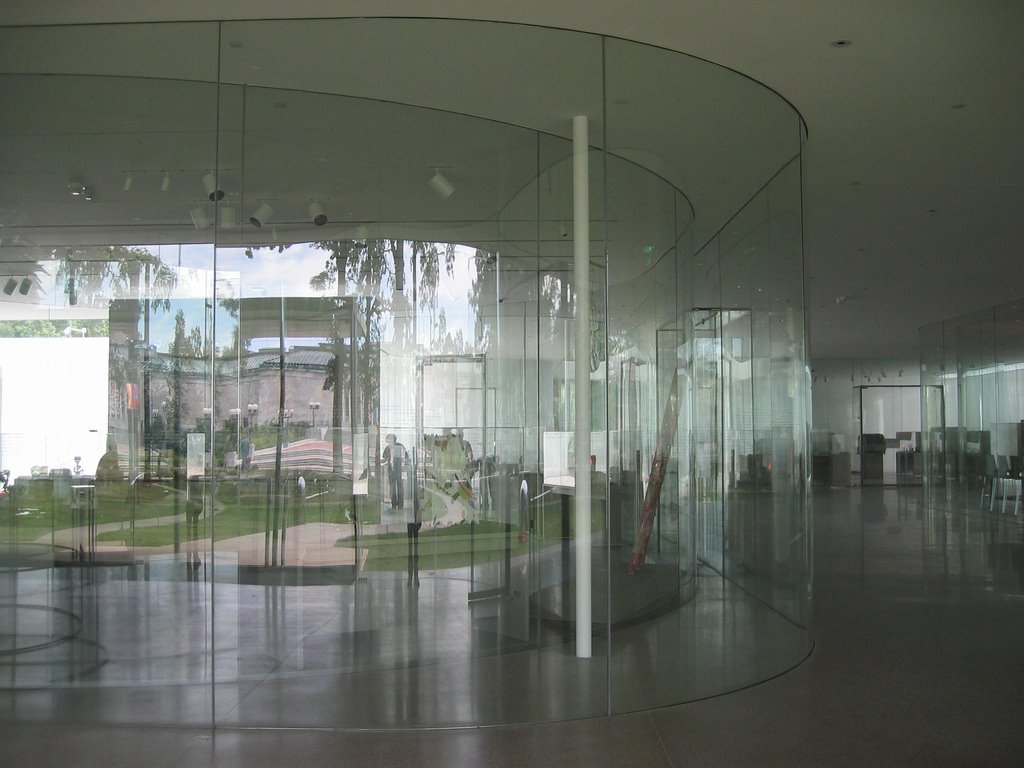
Check out Christopher Hawthorne's review of the brand new Glass Pavilion at the Toledo Museum of Arts, designed by Kazuyo Sejima and Ryue Nishizawa.
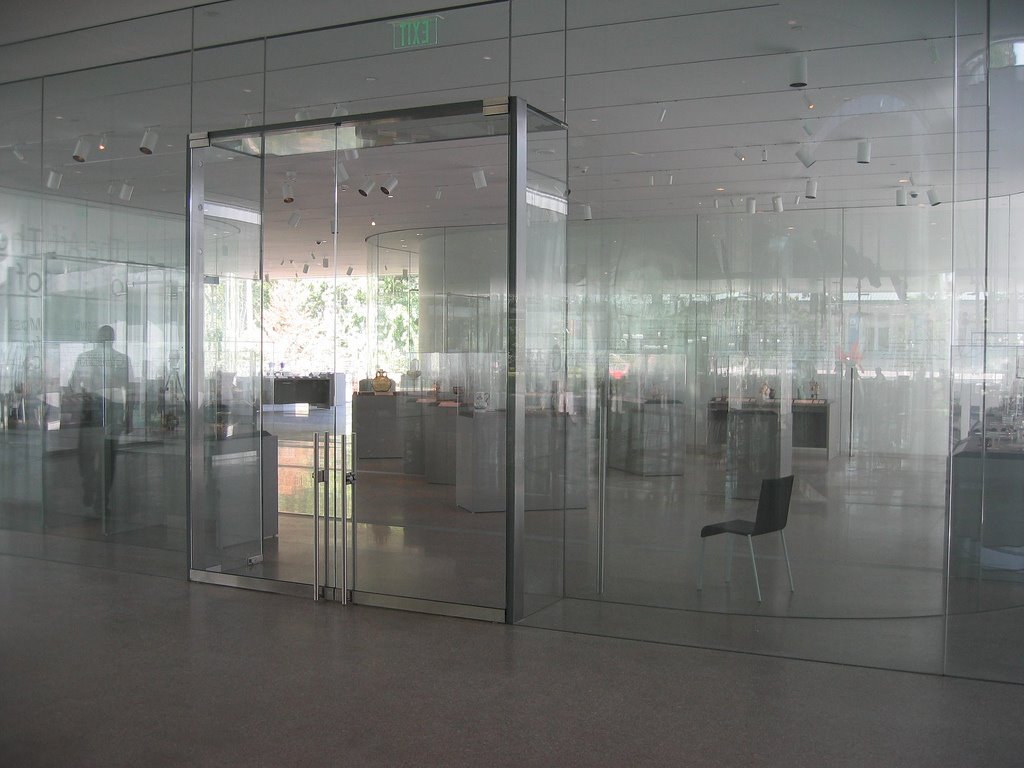
Their joint venture, SANAA, is known mostly for their highly refined, exquisitely detailed mastery of glass, which often produces other-wordly effects of transparency, layering, and pure visual fascination. I've never had the opportunity to see Sejima and Nishizawa's work in person -- although I eagerly await their forthcoming New Museum on the Bowery in New York -- but from what I can tell, there's something going on in their architecture that really distinguishes them from the rest of the contemporary field. I'm not really sure what it is yet. Something to do with an understated play with reflection, light, and visual relationships. But not in the modernist mode -- rather, SANAA operate with a completely postmodern sensibility. And I'm not talking about the disorienting, blingy, hall-of-mirrors postmodernism espoused by people like John Portman and theorized by people like Fredric Jameson, or the ridiculous Wallpaper magazine, empty neo-modernism that Hawthorne accurately criticizes. This work is much more hands-off and open to interpretation, and there is always much more to their projects than meets the eye. As you can tell, I'm having trouble verbalizing the appeal of their work -- as is Hawthorne, who suggests a contrast between SANAA's architecture and the bland minimalism that we find everywhere but, like me, fails to explain exactly why they're different. That's the point though. It's the irreducibility, the confusion, and the refusal of this work to be pigeonholed that makes it superb.

16 August 2006

"welcome to america"

For those who haven't heard this ridiculous story about this year's Senate race in Virginia, read this article. Apparently the esteemed incumbent, Senator George Allen, famous mostly for his father's role as a Washington Redskins coach, made a major racially-motivated gaffe at a campaign event over the weekend in a small town in southwestern Virginia (video here). The controversy comes from comments directed to S.R. Sidarth, a college-age volunteer for the campaign of Allen's Democratic opponent, Jim Webb, who is trailing the Allen campaign with a video camera to unobtrusively research the other side's speeches and strategies (a common campaign practice across the country). In the midst of a stump speech, directly after claiming that his campaign is "run on positive, constructive ideas," Allen began to address Sidarth, who happens to be a U.S.-born citizen of Indian descent, as "macaca," a derogatory term that he proceeded to repeat again -- indicating it was more than just a phonetic mispronunciation. Allen then followed up with "Welcome to America, to the real world of Virginia," implying falsely that both Sidarth and his candidate are strangers to nation and state. What most Virginians will (or should) realize is that this latest mishap follows Allen's long history of racial insensitivity, including episodes of Confederate flag worship and displaying a noose in his office. And regardless of any past offenses, this weekend's outburst reveals Allen to be an obnoxious bully (for lack of a better word), eager to single out the only non-white person in a political gathering and take advantage of that person's difference.
Now, if this were any normal election year, I would say who cares, he's going to win anyway, it's one of the reddest states in the union. But this isn't any typical year, and the Democrats are not running a typical candidate. Jim Webb is a former Republican, former Secretary of the Navy under President Reagan, and a conservative, pro-defense, anti-war alternative to the stale status quo of George Allen, who has done absolutely nothing over the last six years for either the state of Virginia, the country, or humanity. The race is still a long-shot at best for Webb, but perhaps this latest episode will mark the beginning of the end for Allen. The bloggers certainly won't let it die, and I think we've seen already in Connecticut that their political clout is not to be underestimated. Who knows. This is all to say (in too many words, as usual) that if you live in Virginia, you should not only vote for Jim Webb, but you should help his campaign in any way possible. And if you don't live in Virginia, check out his site anyway, and maybe you can help too. Maybe then, come November 7, we can all welcome George Allen to "the real world of Virginia" on his way out of DC and into retirement.


"he has always been better at rhetoric than architecture"

Following up on an earlier post: Christopher Hawthorne reviews Eisenman's new stadium for the Arizona Cardinals.
link: "Grass isn't greener" in the L.A. Times

14 August 2006

blog radar :: 14 august

Just catching up the highlights of my Google Reader feeds these past few weeks:

  • BLDGBLOG. Geoff Manaugh has kept up a constant stream of noteworthy posts, including the Kazys Varnelis interview noted previously, speculation on "landscape theology" (whatever that is) in an interview with Erik Davis, and a feature on inflatable/biodegradable toilets for refugee camps by Studio Cycle.
  • Subtopia. Another blog with consistently high-quality posts, ranging from border station design ( "Welcome to America") to refugee urbanism in Israel and Lebanon ("War as Vacation" ) to a review of an exhibition on the city of Tijuana ("Strange New World" ). The recurring theme of border urbanism reminds me of an article in the most recent issue of Log (#7) by Marie Aquilino ("Free Zone: A Conversation with Amos Gitai"), which addresses Gitai's film "Free Zone" and the the strange phenomena of free-trade cities, particularly Zarqa City in Jordan, a hub with links to the borders with Iraq, Syria, and Saudi Arabia.
  • The fallacy of New Urbanism. From Planetizen, Leonardo Vazquez has written an article ("Urban Fables: The Role Of Storytelling And Imagery In Successful Planning Movements") on how the New Urbanist movement has ap propriated religious strategies of allegory and myth to further their cause. Vazquez compares the New Urbanists to the conservative property rights movement (in terms of their similar appeals to " people's hopes, fears and beliefs") -- while this is certainly right on the mark, I would go further and say that New Urbanism not only takes hints from property rights activists, but in fact operates in an almost identitcal manner as the broader political and religious right wing. Readers of this blog have heard me rant previously on the convergence of New Urbanist and conservative political ambitions in the wake of Hurricane Katrina. I must say that there is a certain satisfaction in seeing other writers not only comment on the ultimate fiction of New Urbanism -- its false nostalgia for a past that never existed in the first place, as I like to say -- but also relate it to the fictions (and, dare I say, untruths) that underlie the contemporary right-wing agenda in this country.
  • Niemeyer still going strong. From Tropolism, some cool photos of Oscar Niemeyer's latest project, a theater in Ibirapuera Park, São Paulo. Looks like the old guy still has it...
  • Keller Easterling talks. An Archinect feature: Mason White interviews architect, theorist, and Yale professor Keller Easterling about her writings and practice. From having seeing Easterling's lectures and having her on a couple reviews while at school, I've always been intrigued by her fascination with such strange things as third-world golf courses, cruise ships, and industrial tomato farms. I've been meaning for a while to check out her latest book Enduring Innocence -- check out the interview for a taste.
  • Why Sylvia Sucks. From Michielangelo, a humorous yet enchantingly critical review of a lecture by Sylvia Lavin. I won't go into the details, but topics include iconography, dildos, and pet rocks. Worth checking out.

bldgblog: interview with kazys varnelis

BLDGBLOG continues its recent string of fantastic posts with Geoff Manaugh's interview with Kazys Varnelis, of AUDC and the newly formed Network Architecture Lab at Columbia's GSAPP. Check it out. I was lucky enough to see Varnelis's talk at the Philip Johnson symposium in Yale back in February, which reframed Johnson's career as a series of powerful social and professional networks, and which used Johnson's AT&T Building project from the 80s as a narrative framework for the critique (read the paper here). Varnelis's new position at the GSAPP represents one of Mark Wigley's first new major hires for the history/theory curriculum since his accession to the deanship two years ago, and I think it's definitely a smart pick-up for the school... Varnelis will join the likes of Frampton, McLeod, Ockman, and Reinhold Martin -- already quite a strong bunch -- and hopefully his addition to the faculty represents a renewed commitment to the critical approach espoused by these folks over the years. If nothing else, the NetLab is evidence of Wigley's ever-so-slight shift away from the digital form-obsessed Tschumi years towards a more politically, socially, and ethically conscious form of architectural education. Can't wait to see how it all plays out...

link: "The Logistics of Distance: An Interview with Kazys Varnelis", at BLDGBLOG

10 August 2006

"dynamism tamed"


Ouroussoff's review in today's Times of Peter Eisenman's new Cardinals stadium misses the point by focussing primarily on the architect's compromise between formal innovation and pragmatic realities. First of all, it's a fallacy to give Peter Eisenman any recognition for reinventing the stadium typology, as Ouruossoff seems to do. A football stadium is a football stadium, and this one seems no different. Sure, the motorized field that slides outside the air-conditioned stadium for sunlight and rain is pretty cool and innovative, and it could even be spun as some sort of contemporary, mega-futuristic folly (although one that reflects poorly on our culture's environmental and land-use priorities). But there is no attempt on Eisenman's part to question stadium convention in any formal or programmatic way. An earlier scheme included a somewhat more interesting attempt to integrate the facade slots into the landscape, but apparently that quietly fell prey to value engineering. The final product clearly demonstrates Eisenman's true role of providing the fancy metal icing for your standard wedding cake football stadium. Indeed, the design team of Eisenman Architects and HOK Sport seems to me less a partnership and more a division of labor: Eisenman does the outside skin, and HOK takes care of everything else.

Not that there's anything wrong with that. Don't get me wrong - when I say that Nicolai is missing the point, I mean that he fails to grasp what Eisenman is really up to down in Arizona. A lifetime football nut, Eisenman is clearly having fun, designing a container for his favorite sport. The opportunity to design your own football stadium doesn't come around that often. I've heard this sentiment from the man himself at several lectures and presentations, and at 73, after a long combative career of pissing off people, wouldn't you want to kick back and work on something fun for a change?

So forget the lesson on value engineering, Nicolai. It's a stadium. A nice stadium, but a stadium nonetheless.

link: "Dynamism Tamed by Cost-Cutters" by Nicolai Ouroussoff, in the New York Times

07 August 2006

on lamont vs. lieberman

Since the Connecticut Democratic primary is only two days away, I thought I'd put in my two sense on the race between Senator Joe Lieberman and his challenger in the primary, Greenwich businessman Ned Lamont. The netroots left of course has come out strongly in support of Lamont, less for his actual merits and more for the simple fact that he is not Lieberman, and not in support of our occupation of Iraq. While many heralded the demise of the lefty blogosphere in the wake of Dean's 2004 loss in Iowa, it seems that the rumors of such a death have been greatly exaggerated. Indeed, in a remarkable turn of events over the past month or so, Lamont's campaign, supported vigorously by bloggers and online fundraisers galore, has surged beyond all expectations, with the latest polls showing the challenger with a strong lead. My fascination (and the national media's, I presume) with this particular race stems not so much from an interest in Connecticut state politics, or even for the race's ultimate effect on the composition of the next Senate. Rather, I think (and hope) that this race will have huge consequences for the overall Democratic efforts leading up to November to take back control of the House and Senate. The unexpected rise of an unknown primary challenger and the apparent collapse of one of the Democratic Party's most established and long-serving members of Congress, while having nothing to do with the typical architectural banter that typically graces these pages, has everything to do with the notion of a "progressive reaction." It's ironic that the netroots advocacy of Lamont has coopted the time-tested Republican tactic of emphasizing a single issue -- in this case, the war in Iraq -- and making the entire election a referendum on that particular cause. It's a progressive, anti-war movement operating in a reactionary manner. Will it work for Lamont and his agitated supporters? Who knows. And even if it does, will such a strategy work in the general Congressional elections on November 7? A fired-up Democractic left means one thing during primary season, but it's a whole different ballgame once you factor in the red half of America, especially in states like Missouri, Arizona, Montana, and Virgina, all states with crucial races this fall. Again -- who knows.

All bets are off for Tuesday's race: I certainly would not underestimate Joe Lieberman's organization, election day GOTV efforts, and his capacity to come back from behind. Not to mention his potential candidacy as an Independent, which would be difficult for Lamont to overcome in November. But if I were a resident of the great state of Connecticut, would I take a risk, reject a more or less decent Senator who has spent his whole political career advocating causes with which I identify, and rashly embrace some no-name millionaire who has offered nothing coherent save for a staunch opposition to our military presence in Iraq? You bet I would. Enough is enough: it's time for the Democratic Party to realize that it not only has the potential to regain the majority, but that it already represents the majority. Most Americans want to fix the mess in Iraq; all they need is someone to offer them a way out and a valid alternative to the horrid status quo that reigns in Washington. It's time.

05 August 2006

more on sam jacob + VSBA

Following up on an earlier post: I just came across another piece by Sam Jacob (of England's FAT), which somehow I missed during previous visits to his fantastic site. As I've written about previously, Jacob again embraces Venturi and Scott Brown, he suggesting an atypical (yet nonetheless insightful) interpretation of their career. Although he confesses a fondness for their built work (including the Acadia Summer Arts Program, pictured above), the true root of his admiration (and mine, for that matter) seems to be on a larger ideological and polemical level. It becomes less about that problematic label of "postmodernism" and more about a deeper modus operandi of "Pop": not the standard definition of Pop that we all learned about in Art History class, but rather (in Jacobs' words) "a kind of socially engaged Pop -- a Pop that isn't only fast, fun and ironic, but political and moral as well."

Why, you ask, does the progressive reactionary keep babbling on about Venturi, Scott Brown, and all their followers? Well, for one, it's all about the attitude. The mentality. For me, there's something inherently political -- both progressive and reactionary -- in the act of embracing what the establishment deems garish. Challenging the status quo of contemporary architecture, regardless of formal or stylistic preference, is always a positive thing. Or maybe my affinity for the work of VSBA and FAT stems from a more personal anxiety surrounding my own architecture and (in comparison) its muted blandness. Whatever the case: what it comes down to, and what Jacobs is so right about, is that we can all learn a lot from the ugly and the ordinary. After all, we're all postmodernists, and it's time we embraced it.

03 August 2006

powers of ten

Somebody was nice enough to post the entire Eames short film "Powers of Ten" on YouTube. Always fun to watch.

31 July 2006

on sustainability (briefly)


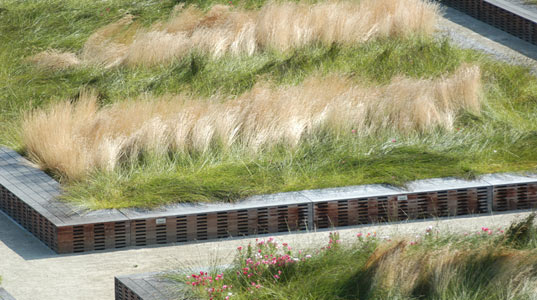
Inhabitat recently had an interesting interview with Paul Kephart (part 2 here), the executive director of Rana Creek Habitat Restoration and Living Architecture, the folks behind such green-roof icons of sustainable architecture as the Gap headquarters and the California Academy of Sciences. I must confess a certain anxiety over the term "sustainability," as it seems to have collapsed into a buzzword that too many architects and clients latch onto as some sort of empty badge of progressive merit, without truly understanding the larger issues at stake. Yet while I am certainly no expert on green architecture and sustainable technologies, I understand that sustainable practices must be integrated into the architectural status quo in order for the discipline to have any lasting relevance. It is in this respect -- the interesection of ecology and utopia -- that I value the work (and the comments) of Kephart and his firm.

The most informative aspect of the interview is Kephart's specificity with regard to sustainable methodology (again, in contrast to the mainstream, generic usage of the term). The integration of food production and waste treatment into the architecture of a building particularly seems like a no-brainer. I also appreciate the willingness to extend a building's ecological features didactically into the programmatic realm: the green roof of the California Academy of Sciences building becomes an actual exhibit, an occupiable, living habitat that functions both environmentally and educationally.

One tangential thought: Perhaps a crucial component of an ecologically utopian architecture would be to go beyond the technical details and processes that seem to preoccupy green architects, and to actually project into the future, imagining alternative uses (and abuses) of a building. Maybe designers should include such speculations as a way to grasp the full potential of these nascent practices. In a way, it reminds me of the contemporary architect's need to get over the excitement of flashy forms made possible with digital technologies and to figure out what this new technological wizardy can actually do for architecture and humanity as a whole.
And while I'm on the subject of sustainability, if you haven't seen Al Gore's documentary yet, do so.

link: "Interview: Paul Kephart of Rana Creek", from Inhabitat

25 July 2006

job well done

According to the Times, the Lower Manhattan Development Corporation has decided that its purpose is fulfilled, and its existence is no longer necessary. Brilliant. After such a fantastic job managing the master planning process at the WTC site, overseeing a stellar design selection for the Freedom Tower, supervising an incredibly smooth memorial design process, and seeing all these projects through to final completion, the LMDC indeed is no longer needed. Bravo!

link: "Downtown Rebuilding Agency Says It Is No Longer Needed" in the New York Times

14 July 2006

blog radar :: 14 july

Some quick finds I thought were worth mentioning:

  • eXtra-eXtra-Small House. Via Archinect and Arkinetia, I came across this tiny house by Slovenian office Dekleva Gregoric Arhitekti. It's an inventive solution to the challenges of a tiny urban site, smartly maximizing the quantity of indirect sunlight. Of even greater interest to me is the larger context of contemporary Slovenian architecture (a recent topic of personal fascination and research: the contemporary Balkan architecture culture explosion), about which I plan to post more in the future. In the meantime, check out (in addition to Dekleva Gregoric) Sadar Vuga Arhitekti, Bevk Perović arhitekti, and Maechtig Vrhunc Arhitekti for a taste of the vibrant architectural scene in Ljubljana (Slovenia's capital).
  • "Architectural Tetris". Geoff at BLDGBLOG has a post on a recently completed project by the Danish firm PLOT (which has now broken up into two separate firms: JDS Architects and Bjarke Ingels Group). I'm a long-time fan of PLOT's work, which generally reflects a Koolhaas influence (both partners are OMA alumni, I believe) infused with a strong playful, pop methodology that bravely shows no fear of simple diagrams (and heavy lineweights!). This particular housing complex outside of Copenhagen is remarkable less for its final image (which to me projects an unfortunate bland neomodernism, masking much of the plan's inventiveness) than for its generative strategy, which relies on a multitude of seemingly unique apartment typologies that interlock together to form the two buildings -- hence Geoff's Tetris analogy. Check out Ingels and De Smedt's websites; they produce an astonishing amount of work. Can't wait to see what comes next.
  • "Tourism Infrastructure." Via Pruned. Some cool and strangely ominous photos from John Brinton Hogan's "Vacation" series of national park info signs, scenic overlooks, and other oddities.

12 July 2006

nomadic border architecture

Bryan Finoki over at Subtopia has a good post on migrant housing and other assorted architectures, specifically on the U.S.-Mexico border. Some fascinating facts, as well as exciting insight into design work that addresses migrancy, nomadism, etc. I was especially interested in hearing about projects by Public Architecture and the Design Corps, two organizations who seem to be very committed to the promotion of progressive causes through architecture and design.... we should all learn a lesson or two from these folks.

11 July 2006

swiss bunkers


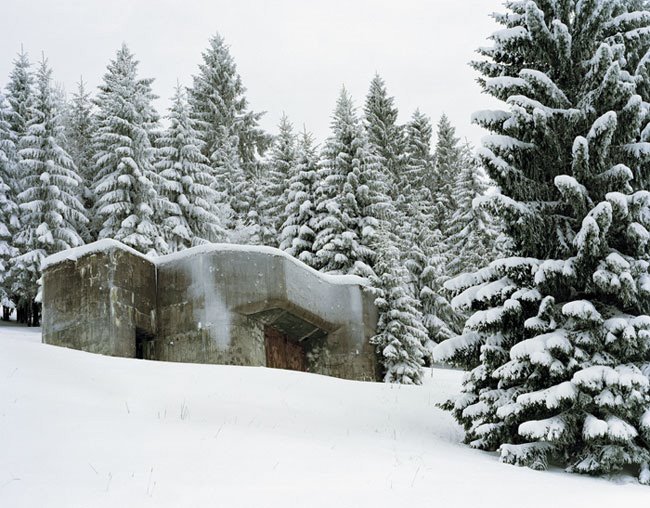
The July issue of Polar Inertia includes some gorgeous photos of alpine bunkers in Switzerland. Check it out.

blog radar :: 11 july

I've been traveling over on the left coast the past few weeks, enjoying the much more pleasant weather that seems to grace that side of the country during the summer months... hence my recent lack of posts. Some interesting tidbits that have come across my screen while on the road:
  • "A Heart of Darkness in the City of Light." Last Sunday's Times had a surprisingly scathing article (and much welcome relief from Nicolai's ridiculous, adulatory articles) by Michael Kimmelman on Jean Nouvel's new Musée du Quai Branly in Paris. The usual postcolonial critiques stand up remarkably well in the context of Chirac's France and the suburban uprisings last fall. I was especially impressed by Kimmelman's grasp of both the aesthetic and political implications of the architecture -- and how they operate hand-in-hand. On a simpler note: does anyone find this building just plain ugly?
  • Archizoo. I've been enjoying this relatively new blog for its thoughtful musings... most notable was a post on the contemporary aesthetic implications of classical of symmetry, in the context of the headquarters of SWIFT, the banking firm responsible for handing over personal information to the federal government. This raises several crucial questions (which are asked constantly on these pages) on the politics of form and the responsibility (culpability?) of the architect. [Also check out another cool post on "Tourist Meccas" that links to some incredible imagery on Polar Inertia . And another one on the architecture of space. Literally.]
  • Toyota Prefab. Via Inhabitat, some interesting facts about Toyota's recent ventures into housing production. Although it's only happening in Japan (so far) and although the design quality is medicore (so far), it's a promising step in the right direction...
  • Torture taxi mapping. From we make money not art, a provocative project of cognitively mapping the unbelievable practice of "rendition" that our government employs in order to escape accountability for human rights abuses in the "war on terror."
  • Bell Labs to go. Via Archinect, word of the impending doom for one of Eero Saarinen's landmark projects from the late '50s. It's interesting how this story hasn't received much coverage -- perhaps it's due to the poor state of affairs at the lab's parent Lucent (a spinoff of the old AT&T). Some may be upset about the destruction of such a productive hotbed of technological innovation (birthplace of cellular telephony, among other things), but what about the architecture itself? Maybe its demolition will give a much-needed jumpstart to the modern preservation movement (the preservation of Modernist buildings, that is). On an unrelated note, it would be interesting to see how the fate of this particular building fits into Kazys Varnelis's long and fascinating tale (as told at the Philip Johnson Yale conference in February) of AT&T's centrifugal disintegration as it relates to the corporation's architectural ventures. Another day...
  • New Orleans commentary . The latest from our friends at Architecture and Morality is a thoughtful reflection on two recent design initiatives regarding post-Katrina New Orleans: the Architectural Record housing competitions, and the superstar-packed exhibition in the Netherlands organized by Reed Kroloff. While I agree with the points about the neglect of community involvement and the tendency to fall back on less-than-successful historical models, I think Corbusier's critique fails to acknowledge the importance of imagination and -- indeed -- fantasy in the process of rebuilding New Orleans. The quick dismissal of the (what I assume to be) intentionally utopian schemes of UN Studio, MVRDV, and the "floating cube" citation-winner of the low-density housing competition represents a lack of commitment to the notion of imagining a different (and better) future for the city. Of course these schemes -- the artificial mountain, the monstrous ziggurat, the floating housing -- are not intended to be understood as literal remedies. They are provocative musings, meant to spark new ideas about how to address the survival of this impossible city. If we as architects can't even do that, then what hope is there?

28 June 2006

blandness at ground zero, cont'd

David Childs and SOM just revealed the updated design for the Freedom Tower. Seems they've converted an oppressive 187 ft. metal-covered concrete base to an oppressive 187 ft. glass-covered concrete base. Brilliant.

link: "Architects Unveil New Design for Freedom Tower" in the New York Times

26 June 2006

portmania

Aric Chen resurfaces (after his departure from the Architect's Newspaper gossip column) in today's Times with a piece on John Portman and his many super-hotels. I must confess a certain awe/admiration for Portman's spaces -- on more than one occasion, I have wandered around the Marriot Marquis in Times Square just for the hell of it, watching those retro-round elevator pods shoot up into the impossible atrium/void. In this respect, I definitely sympathize with Koolhaas's simultaneous contempt and fascination with Portman's hotels -- and I think his suggestion in S,M,L,XL of the isomorphism between Portman's voided hotels and the decentered nature of Atlanta offers quite a strong critique of both. (Yet I should note that I think the true source of Koolhaas's admiration of Portman is not the architecture, but rather the megolomania.) Of course, Koolhaas was not the first to appropriate Portman as a symptom of broader cultural developments; Fredric Jameson's seminal 1984 article "Postmodernism, or The Cultural Logic of Late Capitalism" introduced Portman's Bonaventure Hotel in L.A. as the archetypal "postmodern hyperspace," with its "milling confusion" of the bewildering atrium, elevators, escalators, and aimless wanderers. Chen hints at the Jameson text when he mentions the labyrinthine, disorienting nature of Portman's spaces, but mostly his commentary presents a watered-down interpretation of Portman's architecture, with lines like the following: " Their cylindrical tinted-glass towers sparkled atop concrete podiums, while inside, ficus-filled Xanadus of flying walkways, spiraling stairs and cantilevered terraces were waiting to be discovered — an ideal habitat for the modern nomad in search of a well-garnished cocktail." Surely there's more to modern nomadism, and more at stake in Portman's hotels, then the quest for booze? Too bad Chen didn't delve deeper... but then again, it's just a Travel section article.

link: "The Kubla Khan of Hotels" by Aric Chen, in the New York Times

20 June 2006

new digs in baghdad


Some quick facts about the new United States Embassy currently under construction in Baghdad:

  • 104 acre site
  • $592 million (more than the price tag for the WTC memorial complex)
  • intended to house, feed, and entertain 8,000 employees
  • construction is contracted out to a Kuwaiti firm known for questionable labor practices
The Nation has a characteristically over-the-top piece on the embassy that nonetheless gets the point across. My favorite excerpt:
Democrats demanding an exit strategy from Iraq are routinely derided by the Bush Administration as cowards who "cut and run." But if this Embassy plan is not a form of cut and run, what is it? Instead of cutting and making a run for Kuwait, they intend to cut and run into what amounts to the world's largest bunker, a capacious rat hole where they can wait in safety until all the Iraqis have killed one another or all factions unite, march on this air-conditioned citadel and slit the throats of its irrelevant inhabitants.
link: "Bush's Baghdad Palace" by Nicholas von Hoffman, in the Nation
link: "Giant U.S. Embassy Rising in Baghdad" by Barbara Slavin, in USA TODAY

blandness at ground zero

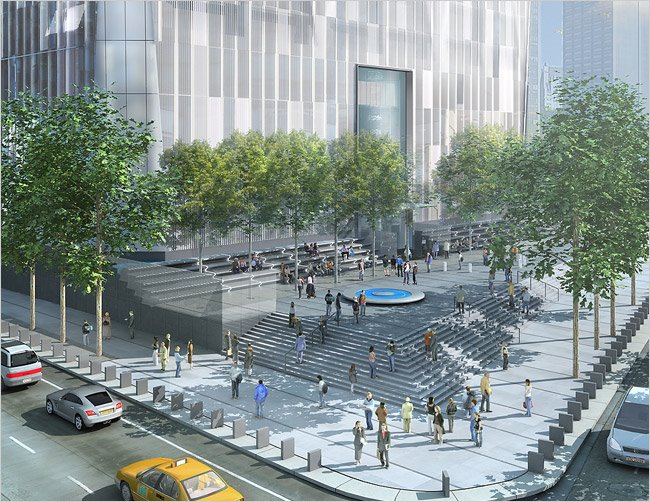
The LMDC today released new plans and images for the revised WTC memorial. The design has successfully been whittled down from Michael Arad's original (if boring) competition-winning scheme to an exercise in total blandness and gutlessness. Just another fantastic product of design-by-committee. The amazing thing is that the primary impetus to reduce the design's ambition was to reduce costs -- to below a $500 million price tag. $500 million, and this is what they came up with? Two square reflecting pools and a grove of trees?! It all makes me long for the mediocrity of the original scheme.

link: "New Plan Unveiled for W.T.C. Memorial" in the New York Times
link: Lower Manhattan Development Corporation

18 June 2006

progressive reactionary cartography


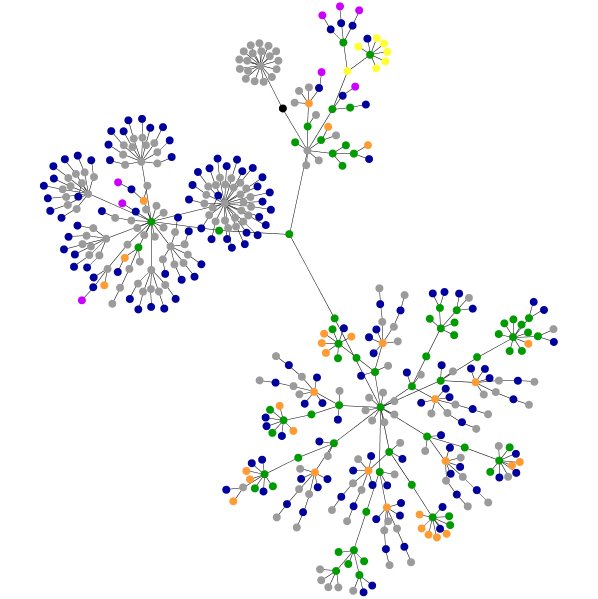
This website represented as a network of links, tags, connections, etc. [Websites as Graphs via BLDGBLOG]