Showing posts with label military. Show all posts

04 August 2008

"ingenious, but useless"


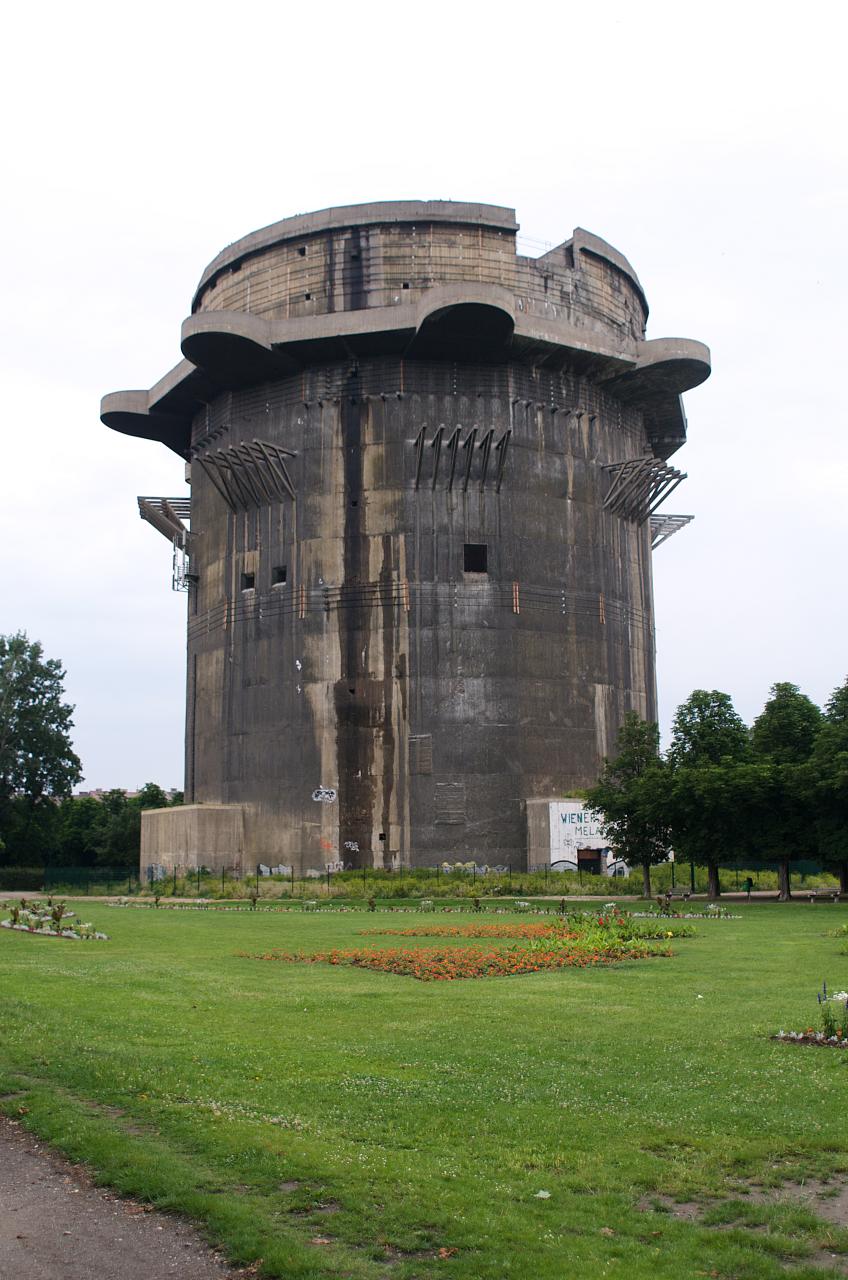
From the New Statesman: an interesting tale of war, historic preservation, and what to do with Vienna's Flaktürme. Relics of the Nazis' visionary but ultimately futile plans for defending the city from Allied bombing raids, these six towers are now lightning rods at the center of a debate on how to recognize and memorialize the city's history under Nazi rule.

In a standoff with the government, which seems to want to keep the towers shuttered, a group of would-be preservationists/activists are hoping to open the towers to the public in the interest of historical transparency.

I suppose you could call it nostalgia in the name of justice. 

In any case, they're gorgeous. I especially dig the oversized, clover-shaped pancake-turrets.


link: "Secret History" by Robin Stummer, in the New Statesman (via the ever-titillating things magazine.)

28 August 2007

ornament and crime in the west bank

[image: New York Times]

From the Times two Saturdays ago: an article by Steven Erlanger on a new road under construction in the West Bank. The road is notable for the continuous concrete barrier that separates it into two separate motorways: one Israeli, connected to the surrounding urban areas through regular interchanges, and one Palestinian, an uninterrupted corridor linking the northern and southern parts of the West Bank, with few opportunities to enter or exit along the way.

What first came to mind while reading this article was the extensive research by architect and theorist Eyal Weizman, who has painstakingly theorized the Israel-Palestine predicament through the lens of architecture and urbanism. This road, conceived by Ariel Sharon in his efforts to nominally satisfy Palestinian demands for territorial unity while ensuring the future possibility for Israeli settlement of the West Bank, really validates much of Weizman’s writings, particularly his chronicles of the complex, three-dimensional strategy of urbanism and territorialization that was developed during the Camp David talks. This strategy, which in extreme cases would vertically stratify (in the “z” axis) specific sites in order to mollify the myriad stakeholders insisting on territorial sovereignty, became a lynchpin in Ariel Sharon’s policy of unilateral disengagement in the wake of the collapse of the Camp David talks.

This road that Erlanger tells us about proves how Sharon and his disciples brilliantly coopted the geographical strategies conceived during Camp David into tools for cementing Israeli dominance in the West Bank. As Erlanger says:
Mr. Sharon talked of “transportational contiguity” for Palestinians in a future Palestinian state, meaning that although Israeli settlements would jut into the area, Palestinian cars on the road would pass unimpeded through Israeli-controlled territory and even cross through areas enclosed by the Israeli separation barrier.
The road becomes both a (weak) justification of a commitment to Palestinian territorial sovereignty and an alibi for future Israeli settlement of the West Bank. As Israeli lawyer Daniel Seidemann so clearly puts it, quoted in Erlanger’s piece: “The Israeli theory of a contiguous Palestinian state is 16 meters wide.”

The other thing that really strikes me about this particular incarnation of a border fence (for a comprehensive inventory of such fences, see here) is the aesthetic dimension of its political purpose. As Erlanger notes, the road’s dividing wall – for all intents and purposes, a political border – is textured to resemble the ancient masonry walls found throughout Jerusalem. What could easily pass in a less charged setting as textured concrete, innocuously decorating the roadside, the decoration itself becomes complicit – indeed, instrumental – in the larger political mission.

Something to think about next time you're driving down the highway...


In other news.... I just finished last week's New Yorker (8/27/07) . A brilliant issue, full of fantastic and provocative pieces through and through – save one. Paul Goldberger's piece on the new Stern building on Central Park West made me at once confused, nauseous, and furious. Stay tuned for a follow-up post.
16 May 2007

a monument to futility


From the Washington Post: an update on the progress of the U.S. Embassy in Baghdad. Peerless among all other U.S. Embassies in size and security, the new complex (mentioned previously in these pages), is due to be completed right on schedule late this summer. There seem to be some problems, though:
The bad news is that it appears it's not going to have enough housing for all the employees who'll be moving to the 27-building complex on a 104-acre tract of land -- about the size of the Vatican, two-thirds the size of the Mall -- within the Green Zone.

In fact, our new man in Baghdad, Ambassador Ryan Crocker, is said to be concerned that, while there are more than 600 blast-resistant apartments in the NEC, there's a need for several hundred more apartments.

Problem seems to be that the original plans didn't account for hundreds of staff working in reconstruction, development, the inspector general's office and other security programs, who, though considered temporary, will need, at least for a few years, somewhere to live. There are 1,000 Americans working at the embassy, and Crocker is looking to downsize, but we hear he's having trouble finding even 100 to toss overboard.

Also, there are about 200 non-U.S. workers brought in from around the region who are replacing Iraqi staff because it is too dangerous for the Iraqis, who live outside the fortified Green Zone, to work for Americans.

Worst of all, there's no provision for rooms for congressional delegations or other distinguished guests coming to shop in the famed markets. There aren't any safe hotels in Baghdad, much less a decent B&B.
The truly remarkable part about all this is not only the Embassy's symbolic role as a concrete manifestation of our country's long-term to commitment in Iraq for decades to come. Its symbolism sadly goes much further, in that its failures also mirror the much larger failure of the diplomatic/military mission it will house. I would have thought that the $1 billion (estimated) budget, which includes a pool, gym, food court, accommodations for 1,000, and an ambassadorial residence rumored to approach 16,000 sf, would have covered all the necessary requirements for the fortress/embassy. But no: apparently along the way, despite the massive funds and murky shortcuts taken to expedite construction, the powers-that-be failed to provide the necessary space for "staff working in reconstruction, development, the inspector general's office and other security programs." That's a pretty big omission, if you ask me.

Ultimately, the Embassy will serve as a monument to its futile mission: a chronically misguided and mismanaged occupation that seems to have no end in sight.

link: "World's Biggest U.S. Embassy May Not Be Quite Big Enough" by Al Kamen, in the Washington Post

11 July 2006

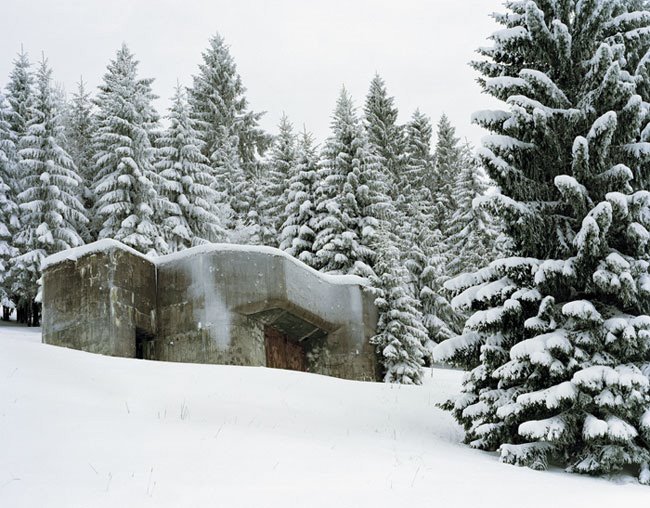
swiss bunkers


The July issue of Polar Inertia includes some gorgeous photos of alpine bunkers in Switzerland. Check it out.

20 June 2006

new digs in baghdad


Some quick facts about the new United States Embassy currently under construction in Baghdad:

  • 104 acre site
  • $592 million (more than the price tag for the WTC memorial complex)
  • intended to house, feed, and entertain 8,000 employees
  • construction is contracted out to a Kuwaiti firm known for questionable labor practices
The Nation has a characteristically over-the-top piece on the embassy that nonetheless gets the point across. My favorite excerpt:
Democrats demanding an exit strategy from Iraq are routinely derided by the Bush Administration as cowards who "cut and run." But if this Embassy plan is not a form of cut and run, what is it? Instead of cutting and making a run for Kuwait, they intend to cut and run into what amounts to the world's largest bunker, a capacious rat hole where they can wait in safety until all the Iraqis have killed one another or all factions unite, march on this air-conditioned citadel and slit the throats of its irrelevant inhabitants.
link: "Bush's Baghdad Palace" by Nicholas von Hoffman, in the Nation
link: "Giant U.S. Embassy Rising in Baghdad" by Barbara Slavin, in USA TODAY

18 June 2006

new urbanism for the military

Via Subtopia and Planetizen: An article in the Times about the Villages at Belvoir, a new collection of New Urbanist housing development on the grounds of Fort Belvoir in northern Virgina. Strange bedfellows? Not really. It makes sense that Rumsfeld's Department of Defense would want to hire the most prestigious of our nation's reactionary architects to design new housing for military bases. While the ambition to provide new and better housing stock for men and women in uniform is admirable, isn't it disturbing that the Army would enthusiastically embrace a stage-set architecture of false nostalgia?
link: "New Urbanism: It's in the Army Now" by William Hamilton, in the New York Times