16 May 2007

postopolis @ storefront

For those in New York, the Storefront for Art and Architecture is hosting a week-long blog-fest called "Postopolis." Starring BLDGBLOG, City of Sound, Inhabitat, and Subtopia, along with many guest stars, it promises to be an exciting series of presentations and discussions. There seems to be quite a generational range of participants, mixing younger bloggers and practitioners with old-guard characters like Mark Wigley, Michael Sorkin, and Lebbeus Woods -- should be interesting to see how that pans out. Who knows... maybe PR himself will stop by and make an appearance?

a monument to futility


From the Washington Post: an update on the progress of the U.S. Embassy in Baghdad. Peerless among all other U.S. Embassies in size and security, the new complex (mentioned previously in these pages), is due to be completed right on schedule late this summer. There seem to be some problems, though:
The bad news is that it appears it's not going to have enough housing for all the employees who'll be moving to the 27-building complex on a 104-acre tract of land -- about the size of the Vatican, two-thirds the size of the Mall -- within the Green Zone.

In fact, our new man in Baghdad, Ambassador Ryan Crocker, is said to be concerned that, while there are more than 600 blast-resistant apartments in the NEC, there's a need for several hundred more apartments.

Problem seems to be that the original plans didn't account for hundreds of staff working in reconstruction, development, the inspector general's office and other security programs, who, though considered temporary, will need, at least for a few years, somewhere to live. There are 1,000 Americans working at the embassy, and Crocker is looking to downsize, but we hear he's having trouble finding even 100 to toss overboard.

Also, there are about 200 non-U.S. workers brought in from around the region who are replacing Iraqi staff because it is too dangerous for the Iraqis, who live outside the fortified Green Zone, to work for Americans.

Worst of all, there's no provision for rooms for congressional delegations or other distinguished guests coming to shop in the famed markets. There aren't any safe hotels in Baghdad, much less a decent B&B.
The truly remarkable part about all this is not only the Embassy's symbolic role as a concrete manifestation of our country's long-term to commitment in Iraq for decades to come. Its symbolism sadly goes much further, in that its failures also mirror the much larger failure of the diplomatic/military mission it will house. I would have thought that the $1 billion (estimated) budget, which includes a pool, gym, food court, accommodations for 1,000, and an ambassadorial residence rumored to approach 16,000 sf, would have covered all the necessary requirements for the fortress/embassy. But no: apparently along the way, despite the massive funds and murky shortcuts taken to expedite construction, the powers-that-be failed to provide the necessary space for "staff working in reconstruction, development, the inspector general's office and other security programs." That's a pretty big omission, if you ask me.

Ultimately, the Embassy will serve as a monument to its futile mission: a chronically misguided and mismanaged occupation that seems to have no end in sight.

link: "World's Biggest U.S. Embassy May Not Be Quite Big Enough" by Al Kamen, in the Washington Post

23 April 2007

Chaubin at Storefront

If you're in or near New York at any time over the next month or so, stop by the Storefront for Art and Architecture to check out a show on the photographer Frederic Chaubin, entitled Cosmic Communist Constructions Photographed. I've posted previously on his stunning photographs of "startling architectural artifacts born during the last two decades of the Cold War." A brief summary from Storefront's site:

Operating in a cultural context hermetically sealed from the influence of their Western counterparts, they drew inspiration from sources ranging from expressionism, science fiction, early European modernism and the Russian Suprematist legacy to produce an idiosyncratic, flamboyant and often imaginative architectural ménage. Unexpected in their contexts, these monumental buildings stand in stark contrast to the stereotypical understanding of late Soviet architecture in which monotonously repetitive urban landscapes were punctuated by vapid exercises in architectural propaganda.
The subjects of Chaubin’s photographs, scattered throughout Armenia, Estonia, Georgia, Lithuania, Belarus, Ukraine and Russia, were all constructed during the last two decades of the Soviet era. Very few of their designers achieved anything more than local recognition, and until now these buildings have never been collectively documented or exhibited. The authors of many works remain unknown, and some have been destroyed since Chaubin’s photographs were taken. Concieved and executed during a moment of historical transition, they constitute one of the most surprising and least known legacies of the former USSR.
As well as presenting the architecture itself, CCCP: Cosmic Communist Constructions Photographed traces the intellectual and political undercurrents that act as a backdrop, and at times inspiration, for the work of these Soviet architects. The exhibition, a compendium of film stills, drawings, magazine articles and historical timelines, maps out the complex genealogy of this overlooked but compelling chapter in the history of 20th century design.

Well worth checking out, indeed. Oh, how I love all things cosmic, especially with regard to Eastern European communist architecture.

14 April 2007

MoPo

It's been a while since I've posted - apologies for that. Things are quite busy with the day job, but do not despair - plenty of thoughts, commentary, and critique is brewing...

In the meantime, I'm honored to be included on Michiel van Raajj's "Most Popular Architectural Blogs 2007" along with such great reads as BLDGBLOG, Things Magazine, and Pruned. True - we're ranked #24 out of 25, but regardless: recognition is always a good thing. Thanks Michiel!

PR.

18 March 2007

"a colourful and pulsating future"

[image: Real Time Rome website]

Ever wonder if there is a latent collective potential for mobile technology, beyond mass communication?
An interesting article from the Technology Quarterly in last week's Economist sheds some light on the research efforts of the SENSEable City Laboratory at MIT, which is pioneering efforts to mine the vast amounts of locative data gathered by tracking mobile phone usage. The laboratory's project "Real Time Rome," included in Ricky Burdett's 2006 Venice Biennale, serves as a prototype for a much larger cartographic project that would generate unprecedented amounts of urban and sociological data. From the "Real Time Rome" website:
The project aggregated data from cell phones (obtained using Telecom Italia's innovative Lochness platform), buses and taxis in Rome to better understand urban dynamics in real time. By revealing the pulse of the city, the project aims to show how technology can help individuals make more informed decisions about their environment. In the long run, will it be possible to reduce the inefficiencies of present day urban systems and open the way to a more sustainable urban future?
[image: Real Time Rome website]

It certainly does make sense to take advantage of the mass proliferation of these mobile devices and capitalize on the information that can be harvested by monitoring usage and location patterns. Characteristically, the Economist is enthusiastic about the benefits to both private enterprise and public good that such data promises: at once a boon to both telecoms and social engineering. What more could one ask for?

[image: The Economist]

Perhaps it's paranoid of me, but could there possibly be a dark side to this new cartographic wizardry? Yes, mobile technology does indeed afford us great freedom and convenience, but what kind of new restrictive and oppressive baggage comes along with it? Would it ever be possible to achieve true privacy? Would turning off your mobile phone become a political statement?
Forgive my reactionary doubts of the promises of new technology. But it's something to think about.

link: "Go with the flow", in The Economist

22 February 2007

"historical amnesia"

From today's Times: Ourossoff on HUD's flawed plans to demolish the Laffite housing project in New Orleans. Some thoughtful and timely words from a critic too often obsessed with starchitecture, Dubai, and other such follies. Worth a read.

link: "History vs. Homogeneity in New Orleans Housing Fight" by Nicolai Ourossoff in the New York Times

18 February 2007

duany on new orleans

New Urbanist architect and planner extraordinaire Andrés Duany offers his thoughts on New Orleans in the pages of the latest Metropolis. His conclusion is remarkably naive, coming from the man whose office is leading reconstruction efforts all along the Gulf coast. Exuding the nostalgia that is so prevalent in New Urbanist thinking, Duany claims a "Carribean" identity for New Orleans, evoking his own Cuban heritage and woefully lamenting the loss of the "leisure" and cultural "ease" that so characterized pre-Katrina New Orleans. It is obvious that the future of a great American city is at stake, and that its unique culture is part of what constitutes that greatness. But I think that the focus on recreating a culture of leisure is not quite the appropriate response to such devastation. If we're going to talk about how its unique climactic and environmental conditions contribute to its identity (be it Carribean, Creole, Cajun, whatever), why don't we talk about the much larger scale infrastructural and hydrological concerns that need to be addressed in order to ensure that such destruction won't happen again? And why not go further? In addition to preserving the culture of the Crescent City, why see this as a tremendous opportunity (which it is) to re-imagine what this "Carribean" city can be?

While Duany's critique of the massive federal funding efforts as ironically too constrictive on individual rebuilding efforts is an interesting premise, it ultimately misses the point. A "culture that arises from leisure" should not be a necessary precondition for the city's physical reconstruction. This is a backwards argument that mistakenly conflates American Dream individualism with some sort of strange idealization of a "Carribean" work ethic. Once again, nostalgia reigns supreme, and the future of New Orleans remains on hold.

link: "Restoring the Real New Orleans" by Andrés Duany, in Metropolis

16 February 2007

"freedom from fear"

Just read a fantastic op-ed piece in today's Times by structural engineer and Princeton professor Guy Nordenson. Direct from a key player in the design of the Freedom Tower, it's the strongest indictment yet of Pataki's total incompetence and negligence with respect to the reconstruction at the WTC site. If this doesn't make it clear how the last five years have been such a missed opportunity, then I don't know what will.

link: "Freedom From Fear" by Guy Nordenson in the New York Times

11 February 2007

the museum for african art: an architectural retreat

[image: Neoscape/Robert A.M. Stern Architects, from the New York Times]

I was not at all surprised the other day to see an article in the New York Times about the Museum for African Art (MAA), a New York institution that has been in search of a permanent home for over twenty years and resurfaces perenially with new hopes of finding one. What did come as a surprise, though, was the news that the indefatigable Robert A.M. Stern has completed a design for the museum's new home on a very visible site on Fifth Avenue at the northeast corner of Central Park. The last that I heard of this building and this site was a couple of years ago, when Bernard Tschumi Architects was tied up in its second or third redesign for this same project, while the MAA was attempting to triangulate various corporate and real-estate interests in order to secure its funding and land purchase. Well, it seems that the Museum was successful in this regard, but somewhere along the way Mr. Tschumi & Co. were dropped from the project, and Mr. Stern triumphantly ascended to the task of providing us with yet another of his bland, soulless towers that seem to be replicating along the perimeter of Central Park.

A quick note: Although it may seem from this post that I am unilaterally anti-Stern, those of you who are fond of Stern's work will be happy to hear that I do consider him a highly accomplished intellectual within the architectural profession. Ironically enough, I do enjoy his early, wittier work for Disney (although his cartoonish pomo has aged less well than the more idea-rich Venturi Scott-Brown portfolio), and I recognize that his deanship at Yale has made an academic impact on the profession that goes far beyond that of his built work. The fact that Stern lasted so long at Columbia while Tschumi was dean proves a certain pedagogical compatibility that priveleges openness, at least on an academic level (see this post on Tropolism for more on that).

Anyway - back to the issue at hand. What makes the MAA design even worse than previous Stern misadventures is the Museum's shocking architectural retreat from an incredibly potent design to nothing more than a cookie-cutter developer building that happens to house a museum in its base. Sure, Stern is providing mediocre aesthetic concessions to the museum (see the "dancing mullions"), but there's nothing else to preserve or express the institution's complex identity. It is worth looking at Tschumi's schemes, of which the earliest is the strongest, to really underline what is at stake in these New York architecture battles, and to understand what we lost in this one.


The Tschumi design was very simple, actually: a sinuous wood-clad volume housing gallery space, lifted above the ground to provide public space below, and topped by a roof garden. Tschumi's tongue-in-cheek solution to New York's stringent street-wall requirements along this prominent stretch of Fifth Avenue was to clad the entire volume in glass, thus building out to the site's perimeter, preserving the Fifth Avenue vertical continuity, and creating that classic Tschumi "in-between" space of excitement that bridges exterior and interior, public and private, city and institution. It was in his stubborn refusal to accommodate his form to zoning conventions (and in the brilliantly but deceptively simple solution that he offered in response) that gave the building its bite, that urbanistic edge that can be found in most Tschumi projects. And it became especially relevant when considering the program at play: a museum for African art in New York City, which is to say a museum predicated at the very basic level on notions of difference, and various ways of preserving and exploring such difference. What better way to house an institution that deals with issues of difference and complexity than with a building capable of asking similarly complex questions on an architectural scale?

The Stern building, in this sense, represents a total failure to provide a conceptually rich architectural response to the MAA program. It essentially becomes the opposite of the Tschumi scheme: an innocuous shell into which the Museum is packed along with 115 luxury condominiums, with those "dancing mullions" and a copper "drum" on the backside as Stern's pathetic and, frankly, offensive response to the "African" nature of the Museum's mission.

But wait - there's more. Stern doubly insults Tschumi by not only having the gall to recycle the curvaceous wood wall motif, but also claiming in the Times "to make a building that is glassy and open, but not a knee-jerk glass block." Knee-jerk? There's nothing more knee-jerk in this city than another masonry developer condo building! And shame on Sewell Chan and the Times for including no mention of Tschumi's previous involvement, while printing an image of the project that is so clearly a cheap knock-off of the Tschumi scheme.

[image: Neoscape/Robert A.M. Stern Architects, from the New York Times]


The whole situation is starting to remind me of Jean Nouvel's Musée du Quai Branly (which opened last year and happens to be on the cover of this month's Record) and a deliciously critical article (referenced in an earlier PR post) by Michael Kimmelman, in which he decontructs the many layers of colonialism, spectacle, and pretension that come together to form what he calls "a heart of darkness in the City of Light." Kimmelman's critique should be seen as a warning for what not to do with the MAA:
If the Marx Brothers designed a museum for dark people, they might have come up with the permanent-collection galleries: devised as a spooky jungle, red and black and murky, the objects in it chosen and arranged with hardly any discernible logic, the place is briefly thrilling, as spectacle, but brow-slappingly wrongheaded. Colonialism of a bygone era is replaced by a whole new French brand of condescension.
The evolution from Tschumi to Stern represents at worst a rejection of understanding the city (as Tschumi did in his early and best writings) as a dynamic engine of unpredictability, a place in which differences and conflicts are to be celebrated and tapped - not separated and put on display. At the very least, it represents a loss for New York, and a loss for Architecture (with a capital A) in general. Here's to hoping that I'm wrong, and that the building's completion in 2009 won't generate the kind of critical response seen above.

link: "Museum for African Art Finds its Place" by Sewell Chan, in the New York Times

06 February 2007

cross-cultural pollination

[image: Zaha Hadid's Abu Dhabi Performing Arts Center, from the New York Times]

There's an interesting thread over at Archinect discussing the article on Abu Dhabi by Nicolai Ourossoff that appeared in this past Sunday's Times. It all started with Javier Arbona's pointed criticism of Ourossoff's egregious celebration of the Abu Dhabi projects as successful proof of the multiculturalism possible in a globalized context. See the conversation for various reactions (including that of yours truly) - but let me just say that I think Ourossoff proves our critiques right with his own (mis)wording of the Abu Dhabi projects as "outlining a vision of cross-cultural pollination." Surely he must have meant to write "cross-pollination" instead of "pollination"? Or maybe that's the point?

link: "Abu Dhabi Object City/Baghdad Invisible City" at Archinect

27 January 2007

new logo

You may have noticed that I'm testing out a new logo - hopefully the first step in a slow process of redesigning the whole site. Any thoughts?
I'm also hoping to integrate more RSS feeds, Del.icio.us links, tag clouds, etc. in an interesting way - I'm finding that the linking of links has been the most productive means of finding information these days. If anyone has some websites that are worth looking at for this kind of thing- let me know.

PR

26 January 2007

russian airports, cured meat, and postmodernism

I'm a bit behind on the posting (as usual) - but here's a quick note on the Economist fantastic year-end issue that by now is already a month old. The fabulously British newspaper uses this annual issue as an excuse to write about odd and offbeat topics, while at the same time using these unlikely news items as critiques of or commentaries on the world at large. And it's all infused, of course, with that characteristic Economist wit that we know and love. It's always something to look forward to, and this year's holiday dispatch is certainly no disappointment. A few favorites (if the links require subscription - I apologize):

"Russian airports: Kama Sutra and feral cats." A fascinating tour of the airports of the former Soviet Union, this article reads like some sort of perverse travelogue. It's brilliant. The story begins with Moscow's Sheremetyevo airport and goes on to explore the nation's other major airports, all of which seem to be characterized primarily by a permanent state of chaos. The insanity, however, nonetheless inspires within the writer a small measure of awe and - dare i say - admiration; the Russian airport becomes a metaphor for the Russian nation itself: a chaotic state of (heretofore) untapped potential. Some choice moments:

[image: Wikipedia]

On Sheremetyevo:

Sheremetyevo is war. The international terminal was built for the 1980 Olympics, to showcase the Soviet Union's modernity; now it recalls the old regime's everyday callousness (the anarchic domestic terminal is even worse). On a bad day, the queue at passport control stretches almost to the runway.

The Sheremetyevo virgin soon meets the various species of Moscow queue-jumper: the brazen hoodlum; the incremental babushka; the queue-surfing clans who relocate in groups when one of their number reaches the front. The immigration officer—usually sporting peroxide blond hair, six-inch heels and an abbreviated skirt—offers an early insight into Russian notions of customer service. Reflecting the country's neo-imperialist confidence, the immigration form was for most of this year available only in Russian (“distributed free”, it says, in case anyone is tempted to pay).

On Mineralnye Vody (in the north Caucasus):

Mineralnye Vody airport is a lower circle of hell.... It is weirdly cold inside. Feral cats have been sighted. The floor has not been cleaned since perestroika; the toilets are hauntingly squalid. On the wall there are arrival and departure boards that no longer work, and a big, proud map of the Soviet Union.
On Irkutsk (in eastern Siberia):

Planes descend into the city's airport over identikit Soviet apartment blocks and rickety Siberian dachas. The current arrivals terminal is a hut on the apron of the tarmac. Passengers wait in the street until the baggage-handlers feel inclined to pass their bags through a hole in the hut's wall. The bags then circulate on a terrifying metal device apparently borrowed from a medieval torture chamber. The nearby departure terminal is chaos, though by ascending an obscure staircase passengers can find an interesting photographic display on “minerals of eastern Siberia”.
On a side note: some quick Google Image searching found a photo of the (in)famous Domestic terminal at Sheremetyevo -- from the article, it sounds like a nightmare on the inside, but it sure looks pretty cool.

[image: link]


"Cured meat: Feet in the trough." A survey of the long tradition of smoking and curing pork that begins with Cato the Elder and ends with the new start-up of Paul Bertolli, formerly of the famous Chez Panisse in Berkeley. Vegetarians should refrain from this one.

"Shopping and philosophy: Postmodernism is the new black." This article is a surprisingly accessible and lucid account of how the "postmodern" critiques of consumer capitalism espoused by writers like Lyotard, Foucault, and Derrida have been assimilated into and coopted by the very Establishment they sought to undermine. I'm continually fascinated by how so-called "oppositional" strategies and techniques are redeployed by those in control to undermine that opposition (and vice-versa: how reactionary strategies can be directed into progressive tactics... but that's another story). An obvious example of this is the amazing ability of the Bush administration to repackage conservative policies under the mantle of supposedly progressive aims like education and environmental concerns -- often branding them under intentional misnomers like "No Child Left Behind," "Healthy Forests," or "Clean Skies."
The Economist article, however, focuses less on politics and more on how consumer marketing has latched onto postmodern theories of difference, fragmentation, and extreme individualism as a means to reinvent marketing practices. Perhaps Apple is the most successful at this strategy -- telling its consumers to "Think Different," as if each individual iPod with its mass-customized engraving, color choice, and playlist preserves some sort of sense of individuality. Regardless - an interesting read, and it makes me wonder more and more where now (with regard to postmodernism) if a newspaper like the Economist, capitalist champion extraordinaire, is writing about postmodern strategies of mass marketing. If capitalism has absorbed and repackaged its own critique, then what's next?

11 January 2007

"walt disney meets albert speer on the shores of araby"

NOTHING YOU HAVEN'T HEARD before -- but I came across a good article from a while back by Mike Davis on Dubai and its eccentricities, both awesome and terrifying.

The most interesting part -- and the most provocative, I thought -- is Davis's assertion that "The utopian character of Dubai, it must be emphasized, is no mirage," which is to say that the city's boom is actually the result of a carefully planned and carefully executed experiment. It's a unique reading of the whole Dubai phenomenon as a misguided, perverse utopia-gone-wrong that makes us reconsider the very concept of utopia itself. Sure, Dubai imagines (and, indeed, constructs) itself as an alternate, better future. But the question is: better for whom? If we now live in an age when "utopia" can now be realized, the stakes become that much greater.

Think about it.


link: "Sinister Paradise: Does the Road the Future End at Dubai?" by Mike Davis (from TomDispatch.com)

23 December 2006

"It is not going to make the front of Architectural Digest"

[image: New York Times]

That's for sure. The Times has an article on the recent shift away from those iconic FEMA trailers and towards "cozier, more permanent models of postdisaster housing." While I can appreciate (in concept) a rejection of the FEMA trailer in favor of a denser, safer, and more effective strategy of reconstruction, the renderings seem a good deal less promising than the rhetoric. Exuding the false nostalgia of New Urbanism (DPZ anyone?), these new FEMA alternatives fail to offer a truly progressive and regenerative solution to reconstruction. The smaller detached models (middle image) seem to be nothing more than FEMA trailers with a little "contextual" wedding-cake decoration on the outside - much in the vain of the "Katrina Cottage" that has gained so much currency this past year.

To me, the failure of this approach is twofold. First, by superficially manipulating exterior decoration to mimic so-called "traditional" architecture, these proposals impose a certain order and aesthetic regime that no longer has any social, political, or cultural relevance. I would go further (as I have done previously) by saying that, intentionally or not, the aesthetic agenda of New Urbanism is ideologically aligned to the right-wing agenda of no-bid contracts, redistricting through "reconstruction," and other such undesirable practices encouraged by the powers that be in Washington.

Secondly, the solutions offered thus far perpetuate the flawed status quo of prefrabicated architecture that has remained in place since the very inception of modular construction. Instead of replicating the FEMA trailers, re-cladding them with white trim and gabled roofs, and in some cases stacking them on top of each other, why not use this chance to rebuild the Gulf cities as an opportunity to re-imagine what a prefabricated architecture could actually be? The merits offered by the panelized construction system of the Katrina Cottage have hardly been exploited, in the sense that they propose a new architecture - and, consequently, a real new urbanism - for the Gulf region.

Baby steps, though, I suppose: one at a time. At least this one - moving on from the FEMA trailer - is in the right direction.


link: "U.S. Give Grants to 4 Gulf States to Upgrade Disaster Housing" by Eric Lipton in the New York Times
04 December 2006

one year on.

Today Progressive Reactionary turns one year old. It was exactly a year ago when I sat down and decided to conduct an experiment: to start a blog about architecture, urbanism, and politics, and to see if it would go anywhere. I was (and remain) thoroughly convinced of the political potency of two separate realms -- the blogosphere and architecture -- and I saw this project as an experiment to link the two, with the hope of exploring what such an intersection could produce and how such potential could be further developed. Having recently graduated from architecture school and just beginning to practice professionally, I am (still) deeply committed to the political dimension of architecture, and the fact that the smallest creative act -- whether designed, drawn, or written -- has larger political repercussions that always must be taken into account. The blog was to become a forum to test these assumptions.

It should be said that there were two main factors that initially inspired Progressive Reactionary. The first is a general political ignorance at both the academic and professional levels of architecture culture that, for lack of better words, just drives me crazy. Ignorance breeds inertia, and the unbelievable lack of political engagement on behalf of architects -- practitioners of the most political of arts -- is simply unacceptable and, truly, unsustainable. The second inspiration was the ongoing debate on the role of pragmatism in architecture: specifically, the flurry of articles and theoretical treatises in recent years on the merits and inadequacies of so-called "critical" architecture. What seems to be a perpetual dilemma for architects -- to what extent one should operate within or without the machinery of global capitalism -- seemed to be a logical starting point for a blog on architecture and politics.

So I thought it would be worthwhile to take a moment and look back on this year. A recap, if you will. And maybe a little pre-cap for what's to come. Anyway, without further ado...

Progressive Reactionary began with a simple provocation: could it be possible to have a reaction of progress? In other words, could reactionary strategies pragmatically be applied to progressive causes?

Several themes emerged. Hurricane Katrina and the incredible -- if tragic -- opportunity it offered for some kind of progressive reconstruction of the Gulf region became an obvious topic of discussion, especially as such progressive prospects dwindled and such opportunities were lost. I found myself posting numerous diatribes on New Urbanism and its discontents, an issue that continues to fascinate me and that will surely surface again. Reconstruction at Ground Zero in Lower Manhattan became another target: the memorial design, the Freedom Tower , and the entire master plan have all devolved into artifacts of bureaucracy and poor leadership, and collectively they represent another missed opportunity.

Another recurring theme has been the work of Robert Venturi and Denise Scott-Brown, and their incredibly prescient embrace of architecture's capacity for social commentary. Apparently there is an obsession with the Venturi's that has been brewing in my subconscious and has been unacknowledged until I realized how many posts I had written about their work. A related obsession is the work of their young British followers, FAT. Stay tuned for more discussion of how garish postmodern architecture can interface with progressive political ambitions.

Some other highlights and random musings include: John Portman (a pseudo-hero, I'm a bit embarrassed to say), Paul Goldberger, Herbert Muschamp, various political postings (and then some), the Baghdad Embassy, the merits of sustainability, SANAA, and Herzog & de Meuron. Quite a grab bag, I know.

As for what's on tap... I have a long list of things that I'm planning, including numerous book reviews, plenty of more architectural criticism, and hopefully more coverage of lectures and events. I have a piece on the Danish architects formerly known as PLOT that I'm working on, as well as a look at the OMA / CCTV exhibition currently on view at MoMA. If only I didn't have a day job... alas. Thanks much to all my readers -- I never expected this experiment to take off so rapidly (I think the latest hit count was somewhere in the thousands, which always surprises me). As always, I appreciate any commentary, criticism, etc... you know where to find me.

PR

08 November 2006

all politics is [not] local

[photo: New York Times]

WELL, WELL, WELL. It's been quite a day, hasn't it? Leading up to Nov. 7, there had been buzz of an electoral "wave" -- akin to the Republican sweep of 1994 -- but did you really think it could happen? Madam Speaker Pelosi? Senate Majority Leader Reid?

The election will be picked over endlessly by pundits in the days and weeks to come -- and most of the analysis no doubt will revolve around the drama and intrigue of the oh-so-close races that are responsible for the new Democratic Congress. [And what drama! McCaskill surging at 1am ... Tester clinching it this morning ... and Webb, incredible Webb, defeating George Allen by the slimmest of margins.]

For me, however, this election goes beyond the drama and excitement, and it really becomes about a much larger shift in the political landscape of this country. Legendary Speaker Tip O'Neill is often (and wrongly, some say) credited with coining the phrase "all politics is local," a political worldview that stresses the importance for elected representatives to respect and tend to their immediate base in order to preserve their positions. And indeed, in O'Neill's day, if you were a congressman, you really did have to cultivate that local base in order to stay in power. Local issues ultimately trumped national or global issues; in many ways, the widespread Democratic neglect of their base helped accelerate the Republican takeover in 1994.

Today is a different situation. In contrast to the hyper-localism of the days of Tip O'Neill, it seems to me that national and international politics have collapsed into the local, and our elected representatives are now held accountable for events and policies of global scope. Sure, there are always broader national trends that affect local elections, but one can't help but notice how a global paradigm of a "smaller world" resulting from the constant flow of information has begun to affect the democratic process itself. For me, this election has always been about accountability -- about sending a message that the status quo is not acceptable, and that change is necessary. Suddenly we find that a congressman from Indiana or Kentucky can be held accountable for national issues and international policies; democracy is becoming redefined as accountability becomes globalized.

So congratulations, Dems. Enjoy this moment; you've certainly earned it. But also be wary. An increasingly empowered electorate will make 2008 that much harder.


06 November 2006

vote.

Tomorrow's a huge day. Be a part of it. Democracy is not a spectator sport.

PR

16 October 2006

40 bond update

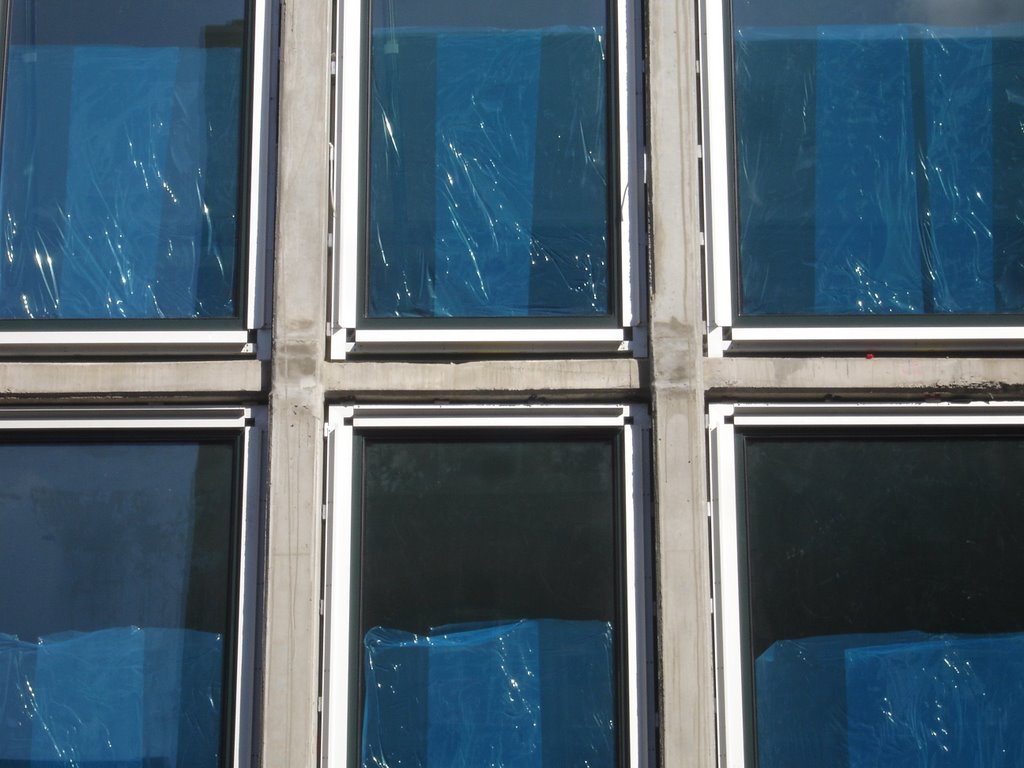
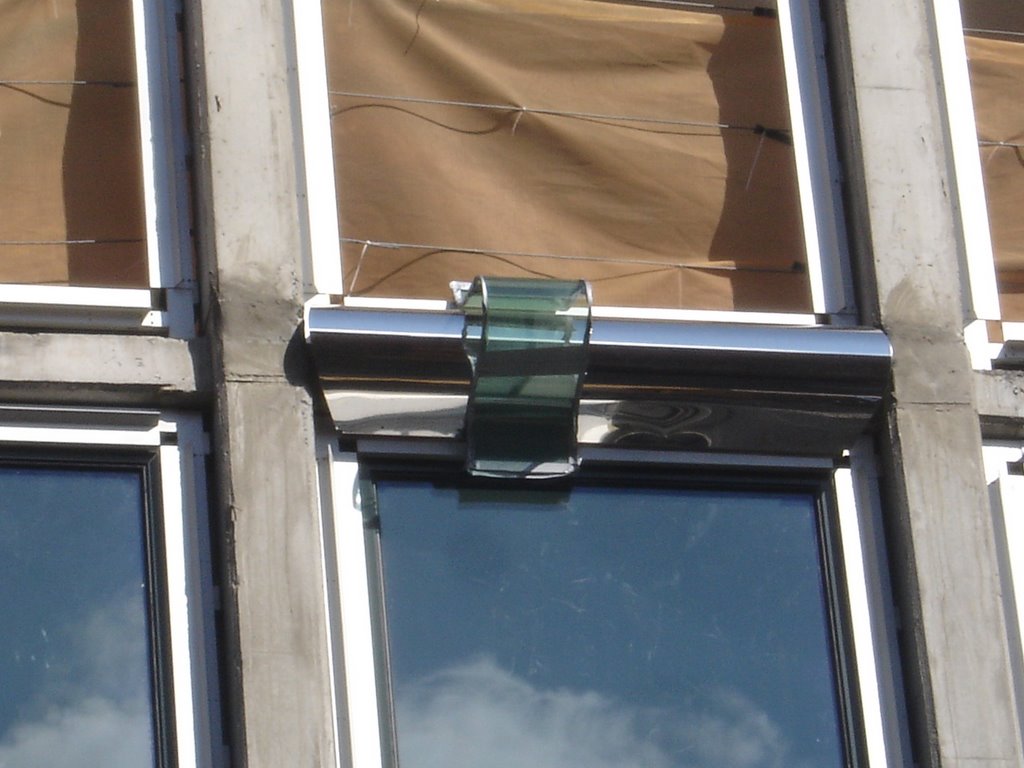
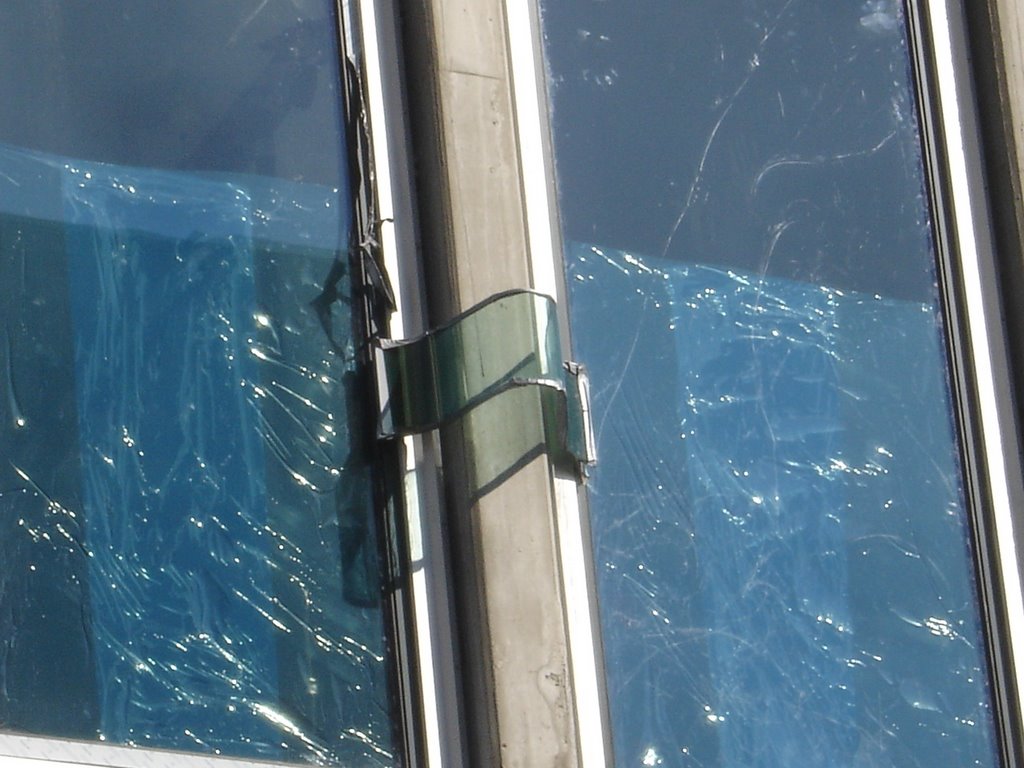
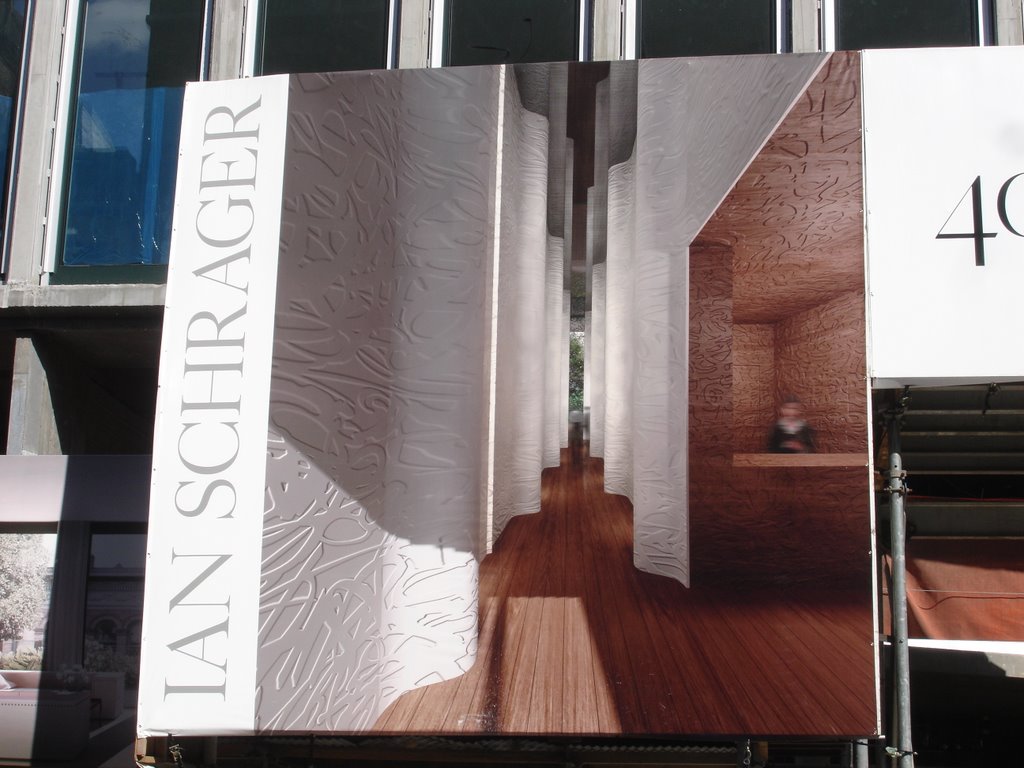
I got a chance over the weekend to snap a few photos of the rapidly-progressing 40 Bond project, an Ian Schrager residential development designed by those Swiss hot-shot duo Herzog and de Meuron. Although I do enjoy much of Herzog and de Meuron's formal research, material treatments, and patterning techniques, I tend to regard their buildings critically and almost categorically as nothing but over-dressed boxes. 40 Bond fits perfectly into this genre: the billboards claim that "Herzog and de Meuron radically reinvent the cast-iron building," when in fact the building is nothing other than a "cast-concrete" building, soon to be covered in fancy glass tubing. Material substitution does not suffice for reinvention. And furthermore, by ignorantly invoking the imagery of New York's cast-iron architectural legacy for such a blatant cause of gentrification, H&dM neglects the typology's rich social history. The same can be said for the bling-bling, one-liner appropriation of graffiti imagery for the street-level facade. In the end, 40 Bond is nothing but another developer project, albeit one with a larger budget for ornamentation. And surely the ornamentation will be stunning and the details expertly executed -- but isn't it time for our most famous architects to take on more critical architectural pursuits?


frederic chaubin: socialist architectural eccentricities


[image: "Druzhba Holiday Center Hall" (Yalta, Ukraine, 1984)© Frederic Chaubin]

Via BLDGBLOG and PingMag : a short piece with some fantastic images of architectural relics of the Soviet regimes in countries like Georgia, Belarus, and Ukraine. This understudied genre is a continuing obsession of mine - and although I'm most familiar with and fond of the architecture of the Western Balkans (former Yugoslavia), these particular buildings are quite stunning. The images leave me wanting more. Send any tips, links, references, etc. my way...

link: Frederic Chaubin: Soviet SF Style from PingMag

03 October 2006

"a dark tale of globalization"

[images: New York Times]

I woke up this morning to read this article in the Times about a tanker named Probo Koala that recently dumped hundreds of tons of toxic waste in the suburbs of Abidjan, the capital of Ivory Coast. The tanker, leased by Trafigura, one of those vague multi-national corporations dealing with oil, minerals, and various front companies that disguise its questionable business practices, apparently had been turned away from various ports throughout Europe due to the extreme toxicity of its cargo. Trafigura was unwilling to pay the roughly $300,000 necessary to adequately dispose of the waste, and the company instead opted to dump it in Ivory Coast, where costs are much lower and fewer questions are asked. Now the Ivory Coast is crippled with a massive public health crisis (85,000 sick) and faced with growing political instability as the population demands some explanation for their misfortune (the prime minister has already resigned). Needless to say, this is already a volatile corner of Africa, where it often takes much less than a large-scale environmental and health crisis to spark conflict and unrest.

The story -- reported fantastically, by the way, by Times reporters Polgreen and Simons -- reminds me of Don DeLillo's book Underworld, his 1997 masterpiece that chronicles the Cold War through, among other things, the lens of the global waste industry. DeLillo's book is haunted by a recurring, almost sublime image of a super-tanker that perpetually travels from one global port to another, endlessly but unsuccessfully seeking to unload its cargo of the world's most toxic waste. The diagram of the recent travels of the Probo Koala contains no such sublime quality, but it eerily recalls the darkness of DeLillo's fiction, with the ship's trail literally rendering the devastating, grotesque dark side of globalization.


Both the provenance of the waste and the ownership of the tanker itself are unclear. With a sentence that could be lifted directly from DeLillo, the article matter-of-factly explains the waste's origins: "It came from a Greek-owned tanker flying a Panamanian flag and leased by the London branch of a Swiss trading corporation whose fiscal headquarters are in the Netherlands." What?

Clearly something is wrong with the paradigm of globalization as it exists today. Maybe people will start understanding this before it gets too late? Maybe the devastation in Ivory Coast will somehow have a positive long-term effect as it galvanizes global powers to right these terrible wrongs and mitigate the destructive tendencies of global capitalism?

link: "Global Sludge Ends in Tragedy for Ivory Coast" by Lydia Polgreen and Marlise Simons, in the New York Times